The Survivor Is Not the Only One in the Room
By Felice Munroe, Advocate
October 1, 2026
There are moments in this work that stay with you. Sometimes it is something a survivor says. Sometimes it is the look on someone’s face when they realize that someone finally believes them. Sometimes it is sitting beside someone in a hospital, walking with them through a courthouse, listening to a story that they have been carrying alone, or answering a call when someone does not know where else to turn.
We come to this work because we care. We listen because someone’s story matters. We advocate because every survivor deserves to be treated with dignity, respect, compassion, and choice. But there is something else we must acknowledge.
The survivor is not the only one in the room.
There is also the advocate who is listening. The person answering the hotline. The colleague sitting beside a survivor in court. The person accompanying someone through a hospital response. The supervisor receiving the call after a difficult incident. The manager making sure everyone has what they need. The executive director carrying responsibility for an entire organization and the people who make its mission possible. We are human beings doing extraordinarily difficult work. And if I were to say that I am not affected by what I see and hear, I would be untruthful.
How can we not be affected?
The question is not whether this work affects us. The question is how we recognize that impact, how we respond to it, and how we make sure that caring for the people who support survivors is also part of being trauma informed.
What does the survivor need from us?
A survivor needs more than information and referrals. A survivor needs to experience safety, dignity, choice, respect, and control at a time when trauma may have taken away their sense of control. Sometimes our most important intervention is simply the way we respond. We may be the first person who says, “I believe you.” We may be the person who explains what happens next without making decisions for them. We may be the person who reminds them that they have choices. We may be the person who sits quietly when there are no words that can make what happened disappear.
Trauma informed care asks us to understand that behavior has context. It asks us to consider what a person may have experienced rather than rushing to judgment. It asks us to create environments where people have voice and choice. SAMHSA identifies safety, peer support, trustworthiness and transparency, collaboration and mutuality, and empowerment, voice and choice among the key principles of trauma informed approaches (Substance Abuse and Mental Health Services Administration [SAMHSA], 2014).
A survivor should not have to prove that their pain is worthy of compassion. They should not have to tell their story perfectly. They should not have to respond to trauma in the way we think they should. Our responsibility is not to take control away from them in an effort to help. It is to help restore their sense of safety, agency, and choice.
That is difficult work.
What happens to us as we provide that support?
We listen to stories that most people will never hear. We see fear, grief, anger, confusion, exhaustion, and sometimes hope. We may witness the aftermath of violence. We may sit with someone through a crisis. We may accompany a survivor through systems that can feel overwhelming. We may hear details that we cannot simply erase from our minds when our shift ends.
There is a name for the emotional impact that can result from hearing about another person’s trauma: secondary traumatic stress. Research has shown that victim advocates can experience secondary traumatic stress and that cumulative exposure to traumatic material and direct service work can be important risk factors (Benuto et al., 2019).
Research has also shown why the support we receive from one another matters. Slattery and Goodman (2009), studying 148 domestic violence advocates, found that coworker support and quality clinical supervision were important to advocates’ emotional well being. Their findings also highlighted the protective role of a workplace characterized by respect, mutuality, and shared power.
More recently, North et al. (2025) followed victim advocates over one year and examined organizational support, supervisory support, burnout, and turnover intentions. Their findings highlighted the importance of organizational and supervisory support and the role of burnout in understanding whether advocates intended to leave their work.
This matters because sometimes people in helping professions are expected to be resilient simply because we chose the work. But resilience does not mean becoming unaffected. It does not mean hearing painful stories and feeling nothing. It does not mean leaving a difficult hospital response, court hearing, hotline call, or survivor conversation at the office door and magically becoming untouched by it. We care. That is part of why we are here. And caring means that sometimes something will reach us.
There are days when this work is incredibly hard. There are moments when we need a breath. There are cases we may continue thinking about after we leave work. There are stories that remind us just how much suffering exists in the world. That does not mean we are doing something wrong. It means we are human.
What does the organization owe both of us?
If we believe that trauma informed care matters for survivors, then we must also ask what trauma informed care looks like for the people providing the care. A trauma informed organization does not simply ask, “How can we take care of survivors?” It also asks, “How are we taking care of the people who take care of survivors?”
SAMHSA’s trauma informed framework recognizes trauma in clients, families, staff, and others involved with a system. It emphasizes that trauma informed practice should be integrated into organizational policies, procedures, and practices, not limited to direct services (SAMHSA, 2014). More recent SAMHSA guidance continues to emphasize safety, peer support, collaboration, empowerment, and workforce development as important elements of trauma informed organizations (SAMHSA, 2023).
This is important because self care cannot become another responsibility we place entirely on the worker. We cannot tell people to practice self care while giving them no space to breathe. We cannot tell someone to use their support system while creating a workplace where asking for help feels like failure. Supporting workers is part of good trauma informed practice.
And I am grateful to work in an organization where this is understood.
At SAOP, the importance of self care is recognized. The work is acknowledged for what it is. We are encouraged to take care of ourselves, and there is an understanding that preventing burnout is not simply an individual’s responsibility. Group supervision gives us space to process, learn, support one another, and remember that we are not carrying this work alone. That matters.
It matters when a supervisor asks how you are doing after a difficult situation. It matters when colleagues understand without requiring a lengthy explanation. It matters when leadership recognizes that people cannot continually pour from an empty cup. It matters when an organization understands that supporting its workers strengthens the work being done for survivors.
Sometimes trauma informed care looks like sitting beside a survivor. Sometimes it looks like sitting beside a colleague. Sometimes it looks like group supervision. Sometimes it looks like saying, “That was a hard one.” Sometimes it looks like taking a day off. Sometimes it looks like laughing with coworkers after a difficult day because for a few minutes you need to remember that you are more than the hardest thing you witnessed that week.
We cannot promise that this work will never hurt. We cannot promise that we will never go home thinking about a survivor. We cannot promise that every story will leave us unchanged. But we can promise that no one has to carry the weight alone.
The survivor needs the advocate. The advocate needs the colleague. The colleague needs the supervisor. The supervisor needs the support of leadership. And the organization needs every one of us to remain well enough to continue doing this work with compassion.
We cannot care for survivors by forgetting ourselves
Because trauma informed care is not only about how we respond to the person sitting across from us. It is also about how we respond to the person sitting beside us.
The survivor is not the only one in the room.
And sometimes, the person who needs us to notice them is the person who has spent the entire day noticing everyone else. That person may be a survivor. That person may be an advocate. That person may be you. Perhaps trauma informed care begins when we remember that all of us deserve to be seen.
Reference
Benuto, L. T., Singer, J., Gonzalez, F., Newlands, R., & Hooft, S. (2019). Supporting those who provide support: Work related resources and secondary traumatic stress among victim advocates. Safety and Health at Work, 10(3), 336–340. https://doi.org/10.1016/j.shaw.2019.04.001
North, M. N., Thompson, Y. T., Jorgensen, A., Taylor, E. K., Miller, M., Ralston, E., & Silovsky, J. F. (2025). Lean on me: The role of organizational and supervisory support in understanding work outcomes in victim advocates. Children and Youth Services Review, 171, 108170. https://doi.org/10.1016/j.childyouth.2025.108170
Slattery, S. M., & Goodman, L. A. (2009). Secondary traumatic stress among domestic violence advocates: Workplace risk and protective factors. Violence Against Women, 15(11), 1358–1379. https://doi.org/10.1177/1077801209347469
Substance Abuse and Mental Health Services Administration. (2014). SAMHSA’s concept of trauma and guidance for a trauma informed approach. U.S. Department of Health and Human Services.
Substance Abuse and Mental Health Services Administration. (2023). Practical guide for implementing a trauma informed approach. U.S. Department of Health and Human Services.
Join Us in Building Trauma-Responsive Communities
At SAOP, we believe that healing and change happen through collective effort. Whether you are a survivor, service provider, community leader, or ally, your involvement matters. Together, we can build trauma-responsive communities that honor survivor dignity, foster resilience, and create safer futures for all.
About the Author
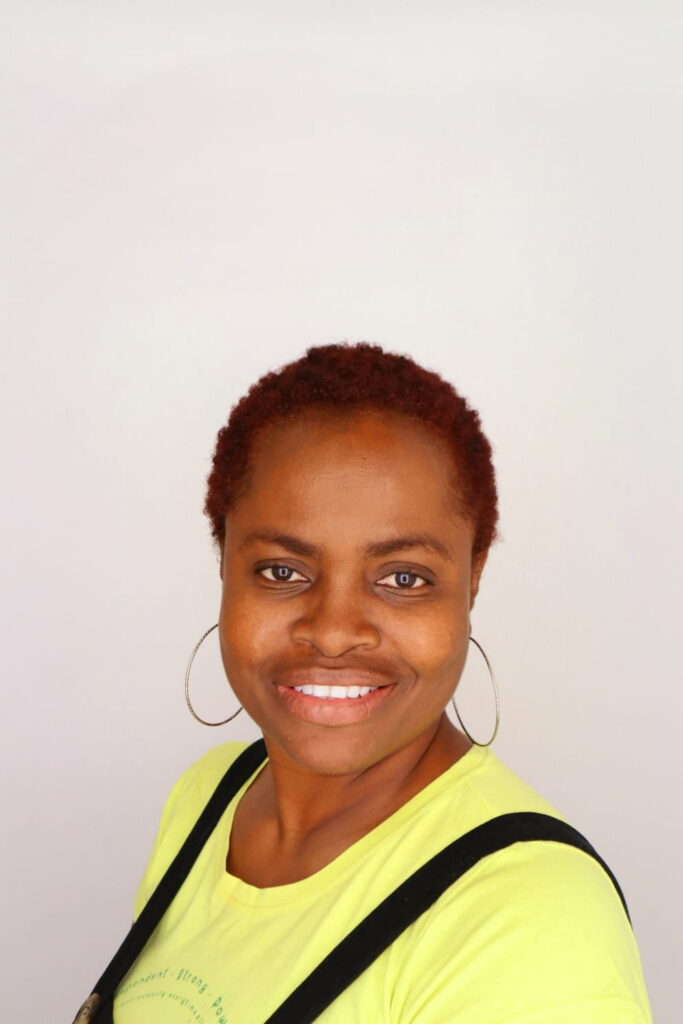
Felice Naomi Rosario Munroe is an advocate with the Survivor Advocacy Outreach Program (SAOP) in Athens, Ohio, where she provides trauma-responsive support and community education for survivors of domestic and sexual violence. She earned her Master of Arts in Latin American Studies from Ohio University, focusing on advocacy for women and girls, education, and violence prevention. Grounded in her lifelong commitment to advocacy, Felice works to build inclusive, survivor-centered spaces that foster healing and systemic change.