Beyond the Purple: Remembering, Honoring,
and Standing Together During Domestic
Violence Awareness Month
By Felice Munroe, Advocate
October 15, 2026
There are some stories that are difficult to tell. Stories that begin behind closed doors, in homes that appear ordinary from the outside, and in relationships that once promised love, safety, and forever. There are stories whispered to a trusted friend, shared in a hospital room, or spoken through tears to an advocate. And then there are the stories that never get told at all. Domestic violence does not always leave a visible mark. Sometimes, the injuries are emotional, leaving a person questioning their worth and their ability to begin again. Sometimes, the greatest act of courage is simply surviving another day.
This October, during Domestic Violence Awareness Month, Survivor Advocacy Outreach Program (SAOP) invites our communities to look beyond the color purple and remember the people behind the numbers: the mothers who worry about their children, the survivors rebuilding their lives, and the people whose lives were taken by someone who claimed to love them. Behind every statistic is a human life. Behind every awareness campaign is a reason we cannot afford to look away.
More Than Awareness: A Commitment to Showing Up
At SAOP, supporting survivors is not confined to a single month or event. It is found in difficult conversations, safety plans, courtroom waiting rooms, and quiet moments when someone experiencing unimaginable pain needs another person to listen. Healing is not a straight line, and leaving an abusive relationship can involve complicated decisions, financial barriers, housing insecurity, concerns for children, and fear for personal safety. Most importantly, the work is grounded in a simple but powerful message: You deserve to be safe. You deserve to be heard. You deserve support, and you do not have to navigate this alone.
Throughout October, SAOP has brought this message into the community through education, outreach, remembrance, and solidarity. Each activity creates an opportunity to reach someone who may need help or honor someone whose absence continues to be felt. Sometimes, a person who needs help will not ask for it today. They may see a display in a library, hear a guest lecture, or notice people wearing purple. They may not say anything at all. But they may remember. And one day, that memory may become the first step toward reaching out.
Preparing the Next Generation of Compassionate Support
SAOP’s 40-hour volunteer training reflected the organization’s commitment to preparing people with the knowledge, sensitivity, and understanding this work requires. The training received great reviews from participants, highlighting the value of meaningful learning opportunities. Forty hours represents time devoted to understanding domestic and sexual violence, recognizing trauma, and learning to respond with compassion rather than judgment. It means understanding why someone might hesitate to report violence, struggle to trust others, or return to an abusive relationship. It also means recognizing that support is not about controlling another person’s decisions but helping survivors understand their options.
We cannot promise that every difficult situation will have an easy answer. But we can prepare more people to respond with care, challenge harmful assumptions, and listen without blaming. In a world where survivors are too often asked, “Why didn’t you leave?”, education can help us ask something more compassionate: “What do you need to feel safe?” That difference matters.
Meeting the Community Where It Is
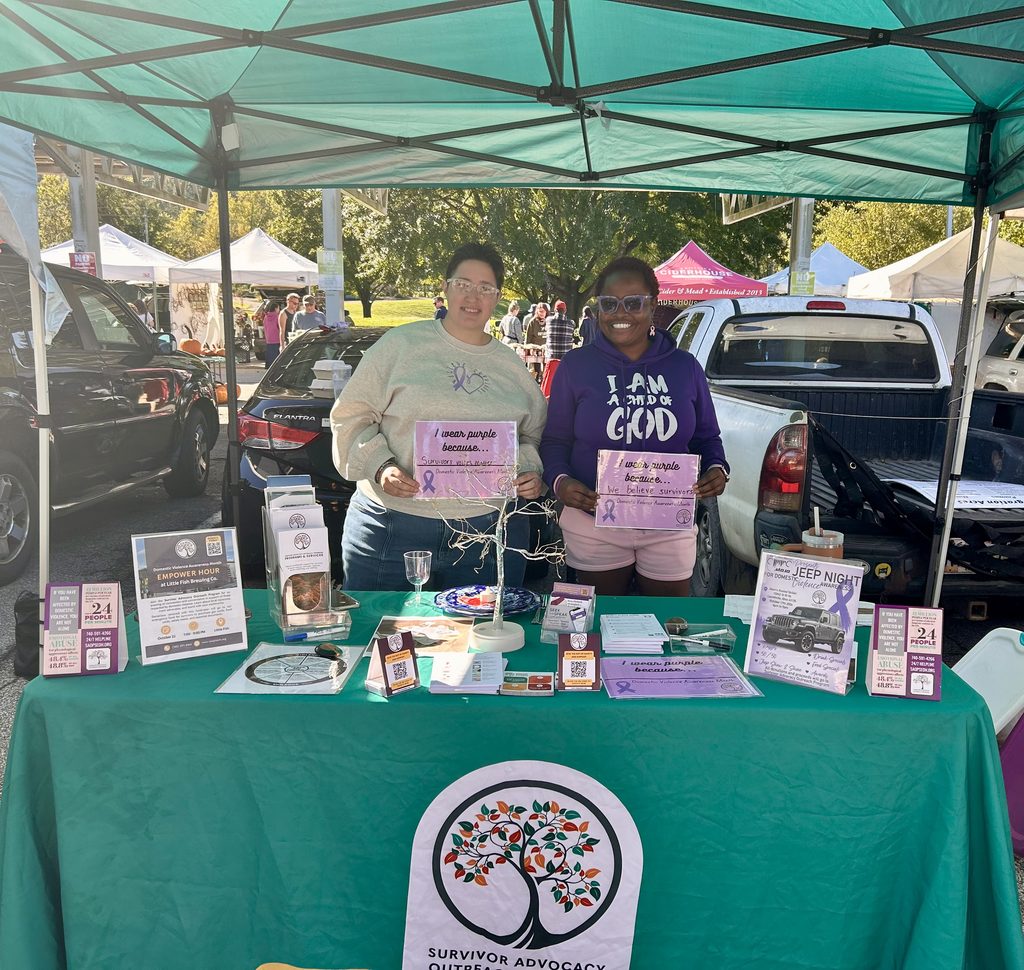
SAOP’s tabling at the Athens Farmers’ Market offered an opportunity to connect with community members in a familiar, welcoming setting. Someone might stop for a conversation, pick up information, or discover services they never knew existed. For someone experiencing abuse, finding help can feel overwhelming. They may fear being judged or worry that asking for assistance will make their situation worse. Community outreach helps make support more approachable and reminds people that resources exist. SAOP’s presence at the Farmers’ Market was about more than distributing information. It was about building connections and making conversations about violence, safety, and healthy relationships part of everyday community life.
That same commitment to education extended into the classroom through guest lectures at Ohio University’s Lancaster campus. By engaging students in conversations about advocacy, violence prevention, and community support, SAOP helped bring attention to issues that deserve thoughtful discussion. A student who learns to recognize warning signs may become the person who notices when a friend is struggling. Another may respond to a disclosure with empathy or help someone find support. We may never know how far one conversation travels. But silence allows harmful beliefs to survive, while education creates opportunities for change.
Survivor Speakout: Making Space for Survivor Voices
Another meaningful moment this month was SAOP’s participation in Survivor Speakout at Ohio University’s Survivor Advocacy Program (SAP). An SAOP advocate participated in the event and shared a previously published article titled “Survivors Should Feel That They Can Claim the Word Rape If It’s Right For Them.”
A Seat at the Table: Remembering Those We Have Lost
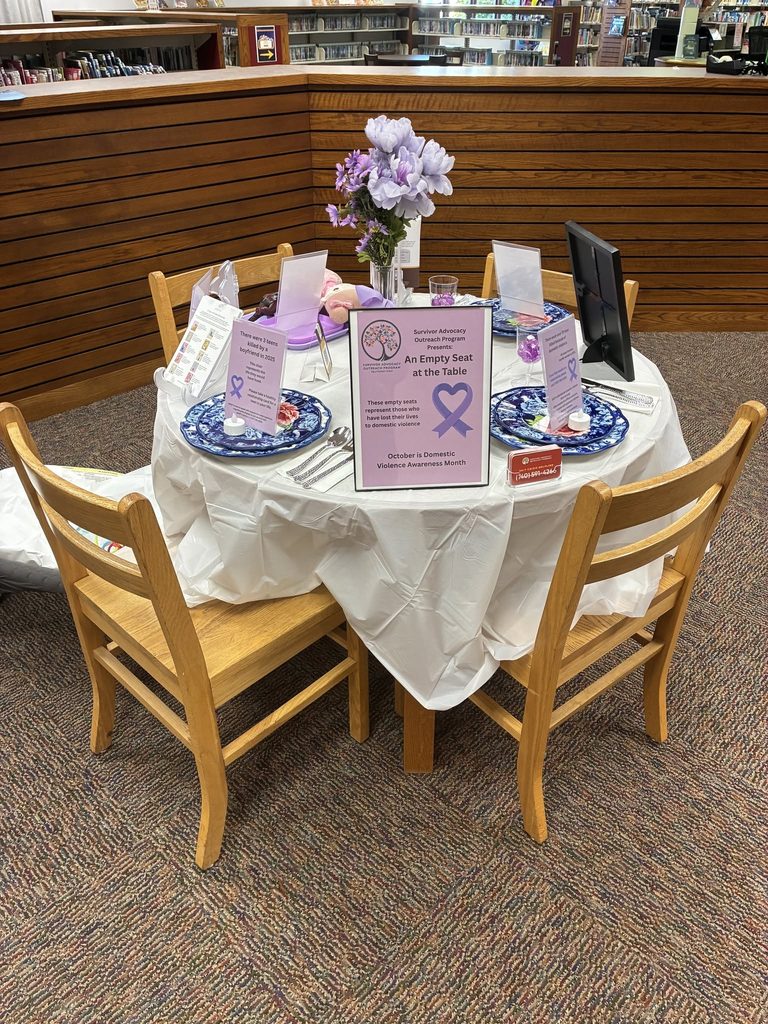
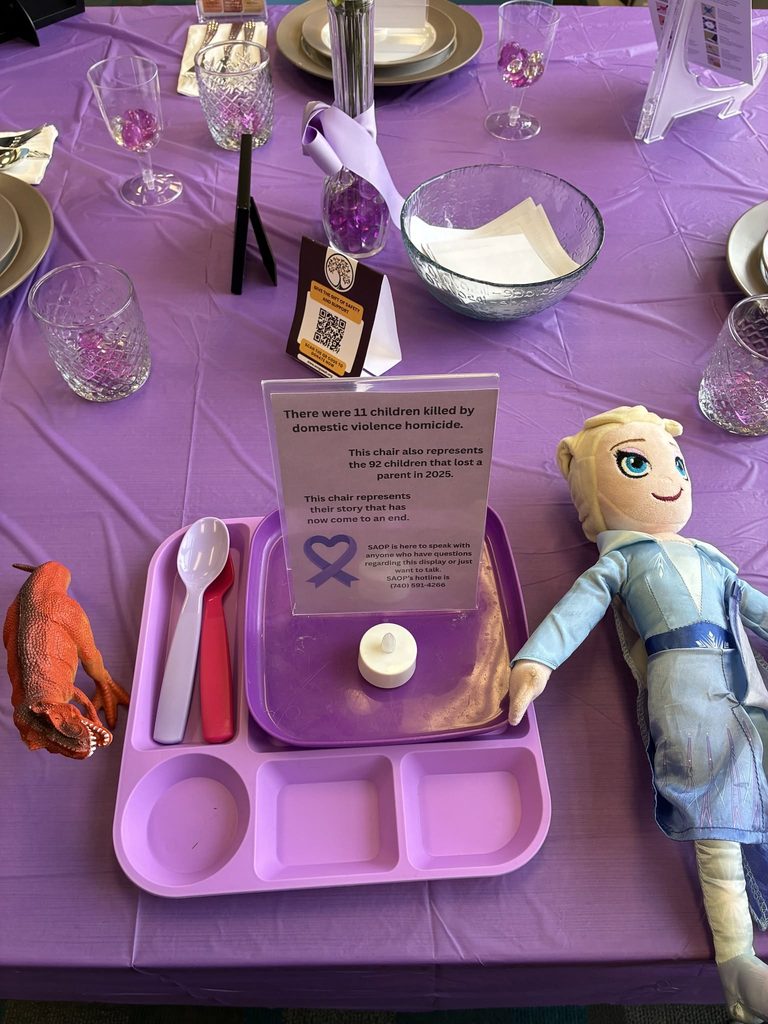
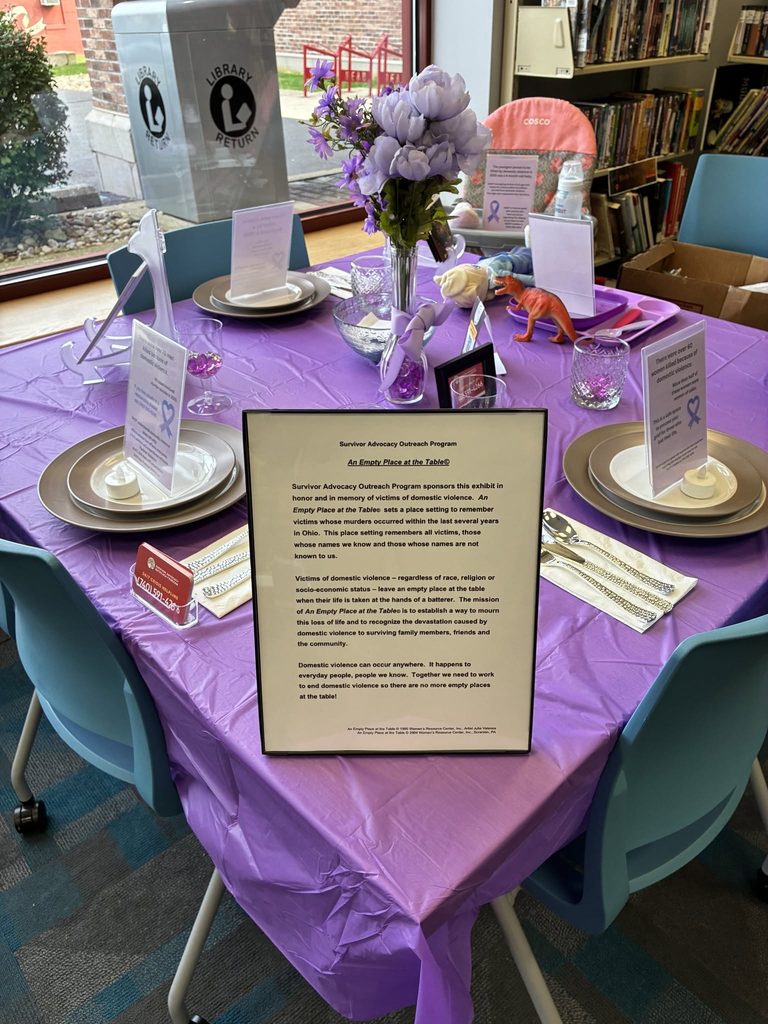
Some awareness efforts ask us to act. Others ask us to pause. A Seat at the Table does both. SAOP has established displays at libraries in Hocking, Logan, and Nelsonville to remember individuals who died as a result of domestic violence. These displays invite community members to stop, reflect, and consider the lives behind the stories represented. A seat at a table symbolizes belonging. It represents a place where someone is expected, where a family gathers, and where a person’s presence matters. But what happens when that seat remains empty? An empty chair can hold an entire universe of grief. It can represent a mother who will no longer embrace her child, a daughter whose future was stolen, a friend whose laughter is remembered, or a family gathering forever changed by someone’s absence. It can represent birthdays that will never be celebrated together and words that will remain forever unsaid.
Domestic violence fatalities are not merely numbers in a report. Each life lost represents a person with dreams, relationships, memories, and a future that should have continued. For families and friends left behind, grief lives in familiar places, favorite songs, and holiday traditions. Their loss does not disappear when the headlines fade or when October ends. A Seat at the Table asks us not to turn away from that reality. It reminds us that domestic violence prevention is not an abstract cause. It is a matter of human life. May each empty seat remind us that prevention matters, warning signs deserve attention, and no one should have to live in fear in the place they call home. May remembrance lead to responsibility. May grief lead to compassion. And may compassion move us toward action.
Wearing Purple: A Visible Promise of Solidarity
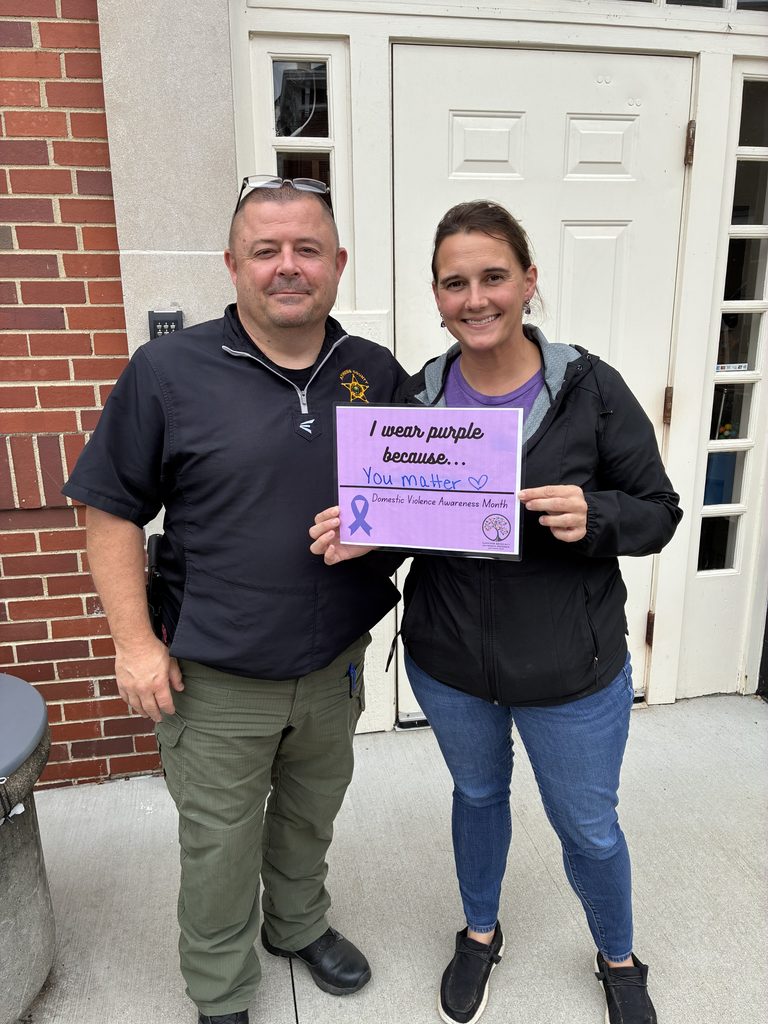
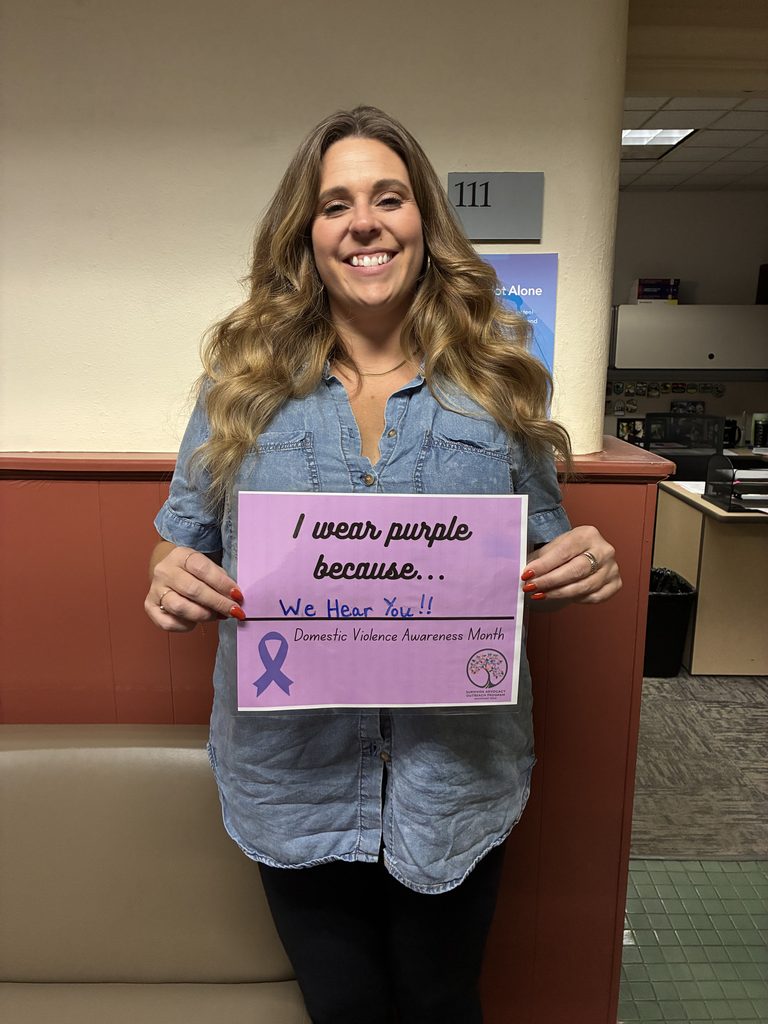
On one day this month, SAOP staff wore purple in solidarity with survivors and those affected by domestic violence. Purple is a recognizable symbol of awareness, representing a commitment to stand beside survivors, remember those who have died, and encourage communities to become part of the solution. A purple shirt cannot erase someone’s trauma or restore a life lost. But it can start a conversation and remind someone that people around them are willing to listen.
For someone who has been told that no one will believe them, visible solidarity can matter. For someone who feels ashamed of what they have endured, it can be a reminder that responsibility for abuse belongs to the person who chooses to cause harm. When SAOP staff wore purple, they stood in recognition of survivors whose experiences may never become public, families whose grief continues long after October, and individuals still working toward safety and healing. Solidarity must extend beyond what we wear. It means respecting survivors’ choices, protecting their privacy, and challenging victim-blaming.
Purple is the symbol. Our actions give it meaning.
Jeep Night for Domestic Violence Awareness
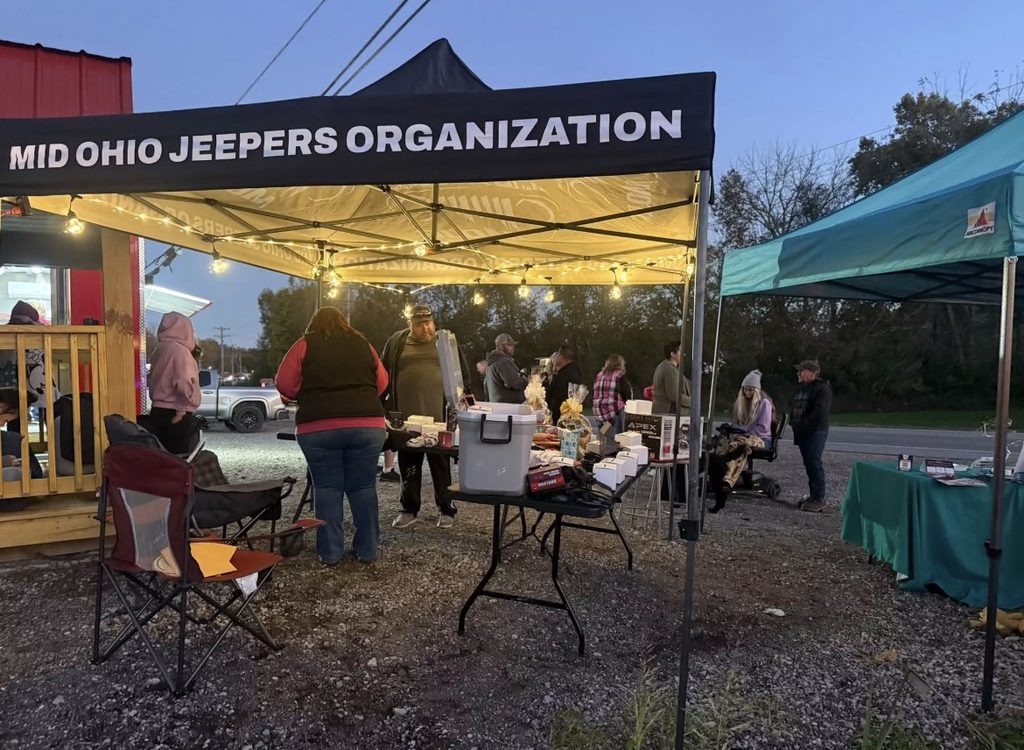
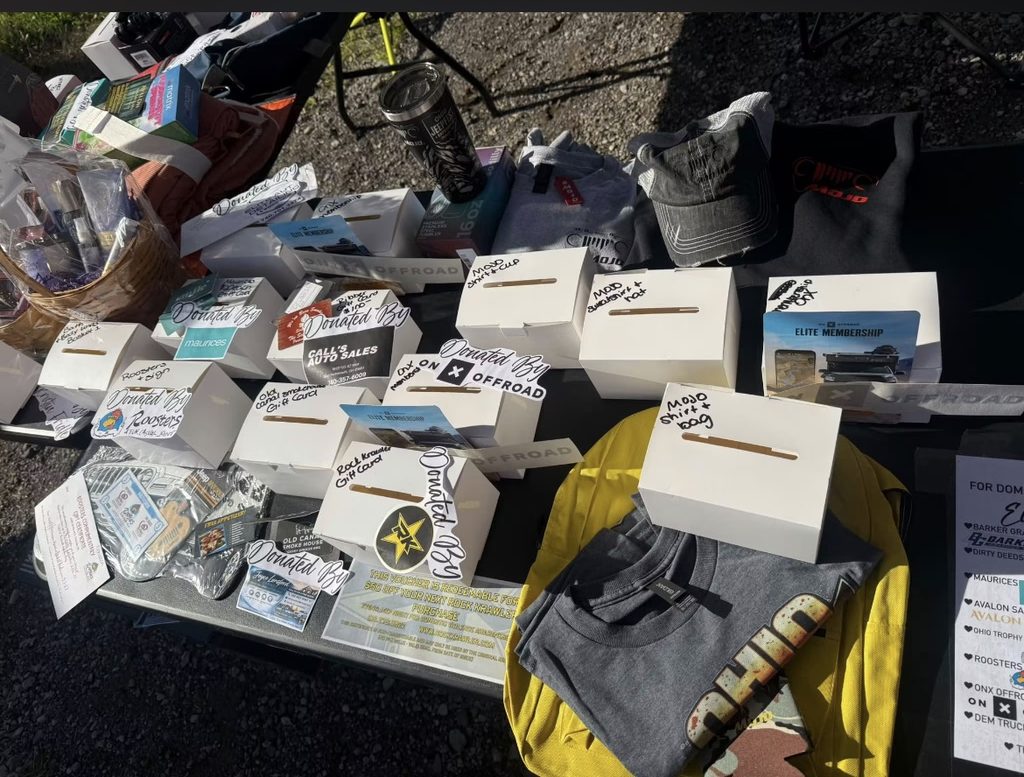
On October 17, 2026, the Mid Ohio Jeepers Organization (MOJO) hosted Jeep Night for Domestic Violence Awareness at Mam’s Rusted Skillet in Laurelville, Ohio. The event will brought the community together for an evening of solidarity, awareness, and support for survivors.
Featuring a Jeep Show & Shine, raffles, a 50/50 drawing, food and drink specials, and awards, the event offered a fun and meaningful way to support an important cause. All donations and proceeds benefited the Survivor Advocacy Outreach Program (SAOP), helping sustain its work supporting survivors and building safer communities. Community events like this remind us that ending domestic violence is a shared responsibility. Every contribution, conversation, and act of solidarity helps strengthen the message that survivors are not alone.
Together, we can end the silence.

Breast Cancer Awareness Month: Another Reminder to Care
October also marks Breast Cancer Awareness Month, reminding us of the importance of education, early detection, appropriate medical care, and support for people affected by breast cancer. Behind every diagnosis is a person navigating uncertainty, difficult decisions, and emotions that can be hard to express. There are families waiting for results, friends searching for the right words, and individuals learning to live with changes they never anticipated.
Breast cancer can affect relationships, finances, and hopes for the future. This month, we are reminded to encourage conversations with healthcare professionals about breast health and recommended screenings, support those navigating diagnosis and treatment, and remember those whose lives have been lost. As we recognize breast cancer awareness and domestic violence awareness this October, we are reminded that compassion must extend beyond public symbols. It must be present in the care we offer and our willingness to accompany others through uncertainty. Both remind us to treat every person with dignity, empathy, and respect.
The Work Does Not End When October Ends
SAOP recognizes that awareness is only the beginning. Our commitment will be measured by what happens after the purple shirts are put away, the library displays are taken down, and the community events conclude. Will we continue to listen when someone tells us they are afraid? Will we challenge the belief that abuse is a private matter? Will we teach our children that love does not require control, humiliation, intimidation, or fear? These questions deserve more than October answers.
To every survivor reading these words: your story belongs to you. You do not owe anyone the details of your pain. You do not have to heal according to someone else’s timeline. You deserve dignity and support that respects your choices. To every family remembering someone lost to domestic violence: may your loved one’s life be remembered for more than the circumstances of their death. May their laughter, kindness, dreams, and place in your family continue to matter. Their life was significant, their absence is real, and their memory deserves care. To every volunteer, educator, community partner, and SAOP staff member who contributes to this work: thank you for helping create spaces where difficult conversations can happen and compassion becomes a responsibility we share. Somewhere, a person may be wondering whether anyone would believe them. Somewhere, a child may be learning what love looks like. Somewhere, a family may be trying to make sense of an empty chair. Somewhere, a survivor may be taking the first quiet steps toward a different future. We cannot change every story. But we can help change the conditions in which those stories unfold.
We can LISTEN. LEARN. REMEMBER. ACT.
And perhaps, because we chose to show up, someone who once believed they were completely alone will discover that they are not. This October, let purple be more than a color. Let it be a promise: that we will not look away, that we will not forget, and that we will continue working toward a world where every person can live free from violence and fear.
Join Us in Building Trauma-Responsive Communities
At SAOP, we believe that healing and change happen through collective effort. Whether you are a survivor, service provider, community leader, or ally, your involvement matters. Together, we can build trauma-responsive communities that honor survivor dignity, foster resilience, and create safer futures for all.
About the Author
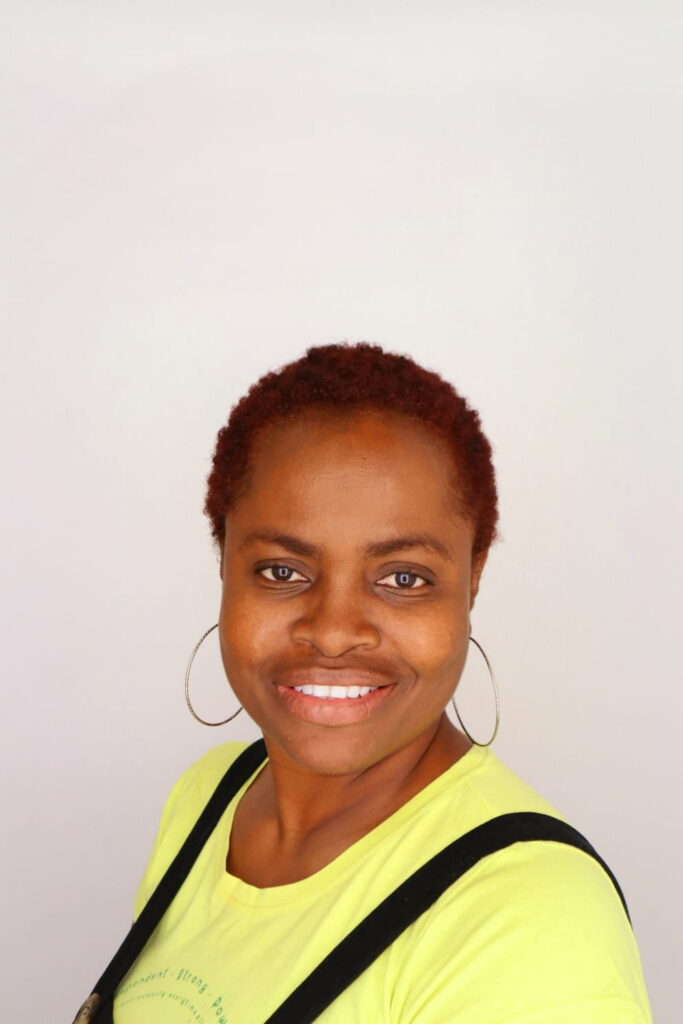
Felice Naomi Rosario Munroe is an advocate with the Survivor Advocacy Outreach Program (SAOP) in Athens, Ohio, where she provides trauma-responsive support and community education for survivors of domestic and sexual violence. She earned her Master of Arts in Latin American Studies from Ohio University, focusing on advocacy for women and girls, education, and violence prevention. Grounded in her lifelong commitment to advocacy, Felice works to build inclusive, survivor-centered spaces that foster healing and systemic change.